|
|
||
 |
 |
|
|





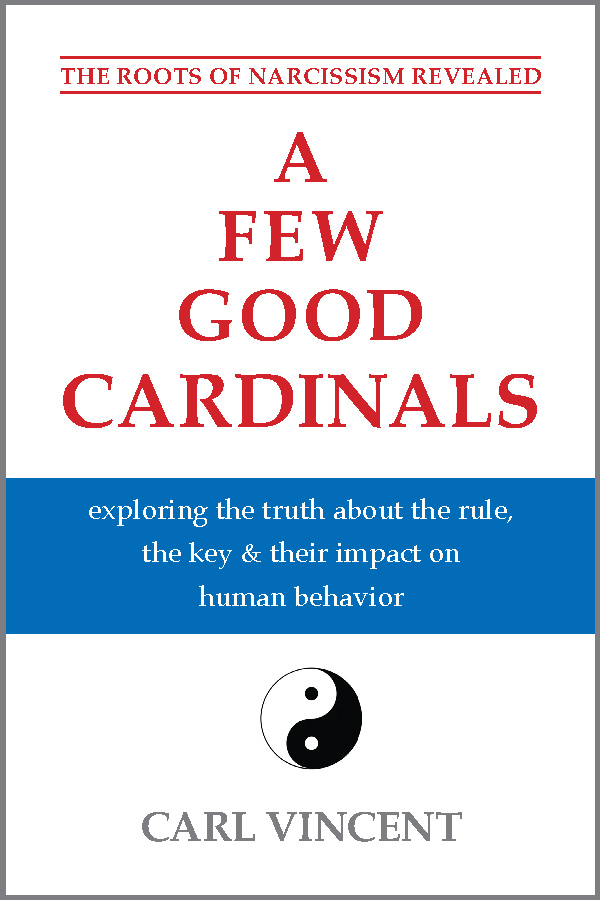
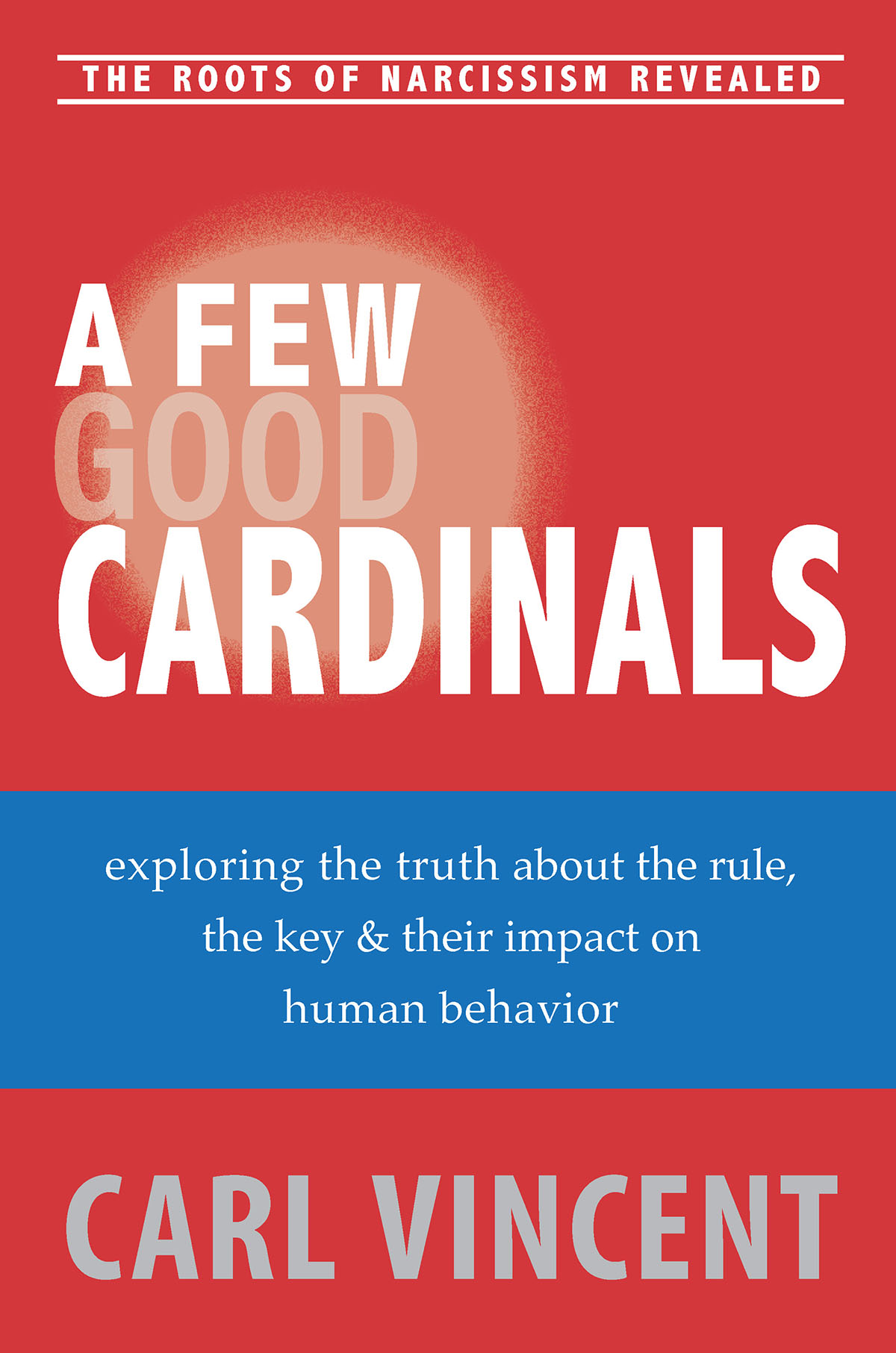
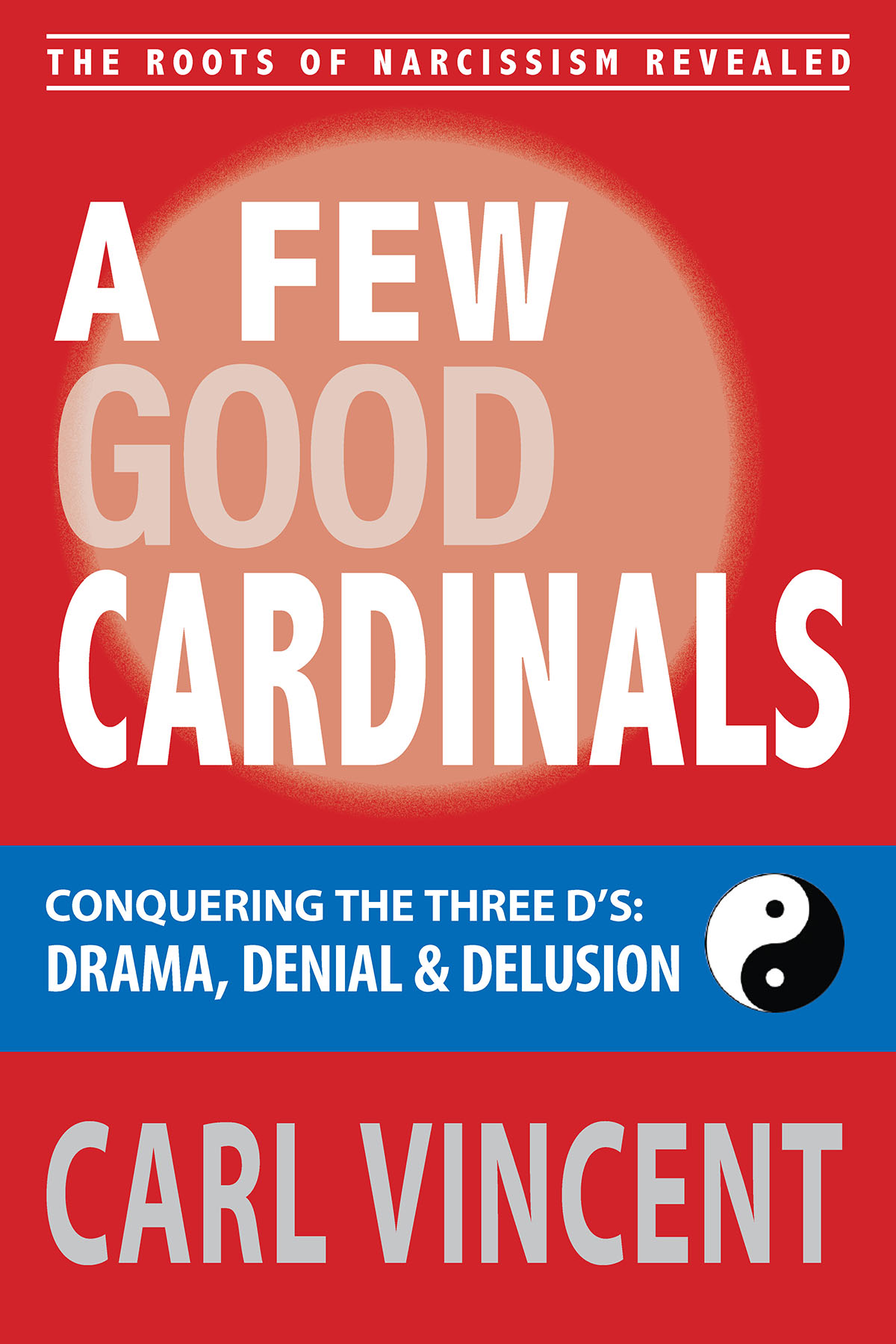
book: A FEW GOOD CARDINALS “At first I was struck by how polite it was and |
||||||||||||||||||||||||||||||||
A few years ago, I had the pleasure of helping some friends with their business. It had been going well albeit slow, but all of a sudden a shift had occurred. Prospective investors changed their minds in droves after committing funds and other things started going differently. Business astrology is the science of using the stars for planning and execution in a very different arena compared to a personal horoscope. A lot of money can be at stake. What can be an unpleasant inconvenience in a personal chart may be interpreted as a major obstacle to be avoided at any cost in business. A retrograde Mars is correlated with “depriving an individual of motivation,” but for a business it means it can’t compete in the marketplace. The effect is dramatically different. The business of my friends was run by an experienced executive team with a deep background in innovation and startup management. What were they doing different that the business had taken an unexpected turn for the worst? There are always multiple perspectives to any scenario. But if you can eliminate at least some factors, perhaps others can paint a good picture. Not being on the inside was my handicap, so I had to look elsewhere. As it turned out, the business had been reincorporated to take advantage of better tax laws as it was preparing for an initial public offering (IPO) on an American stock exchange. There is nothing wrong with that. However, pulling up a horoscope for the reincorporation date showed something quite troubling. Both Mercury and Mars had been retrograde on the date the new incorporation had become effective. Mercury retrograde for a business is not necessarily a bad thing in my experience. It may be interpreted as being slow to release information or being (occasionally) misinterpreted by the public in its official communications. Only public relations and other businesses making money from communications should refrain from registering their company during Mercury retrograde as far as I understand it. Opinions may vary on that. Still, in the case of my friends’ business, the amount of flip flopping in investor and other contract relations post-reincorporation was a bit disconcerting to say the least. As mentioned, Mars retrograde for a business is a very different ballgame compared to personal astrology. A business cannot afford not to be competitive. So, while Mars does its thing every two and a half years or so and figuratively retraces some of its orbit (it doesn’t really reverse its direction, it only appears to do so from our observation standpoint on Earth), it is recommended not to undertake anything new. Mars retrograde lasts about two months and is an ideal time for troubleshooting anything that has been underperforming and for making adjustments as necessary. New undertakings should be postponed until after Mars has gone direct again. What are the symptoms of a Mars retrograde period? A customer may place an order only to cancel or reduce it in size later. An investor may commit to contribute a certain amount only to change their mind and request an adjustment of the terms and a reduction in capital commitment after the fact. These things happen all the time, but generally not en masse and not for a business with solid credentials when no negative forces affect its outlook. In the case of the business of my friends, it appeared that one bad thing started to happen after another. Five years later and there is still no end in sight. Doing another reincorporation by changing the name or operating structure, for example, may be a way out but try convincing a board of directors that does not believe in metaphysics. What could I tell my friends? Upon further examination, it appeared that the date in question wasn’t just a bad day, it was the worst day in the entire year from an astrological perspective. Management had ample time to prepare for the filing and I was assured this had not been a last minute decision. Thus, I suspected that they know more about astrology than they are willing to admit, but that it would be hard to prove. If a business can start on the “wrong” day, what about a baby being born; is there such a thing as “bad luck” with a birthday? Considering how many people have difficult lives filled with suffering, poor judgment, traumatic relations and other adverse events, there may be more “wrong days” than we think. But if we wanted to examine one such person’s life, which horoscope would give us the most “bang” for our buck? We may not have to look any further than the case of Julius “Aleksanteri” Tomminpoika Kivimäki aka Zeekill and a few other online aliases. The Internet became his new home. Joining various online communities, it did not take long for Julius to see hacking as a way to gain fame fast and furiously. While most hackers stay on the good side of the law, Julius took a zero borders approach. At the young age of fifteen, he traveled to Las Vegas pretending to be his father. Attending a DEF CON hacker convention, he splurged on luxury hotels, booz and hookers. Not that there is anything wrong with that… Except, he used stolen credit cards. When a business commences operations on the “wrong” day, a fix is possible. But how are we going to bring the news to a human being? They say awareness is key. But what happens when a person simply ignores any attempt at reason? Karma is next in the form of jail time perhaps. They may ignore that too: “Does not apply to me.” Generally speaking, people in denial may ignore the best and most wholesome of outreach. Being in denial is a trait many decision makers share. Putting patient records on a “publicly” accessible server, no matter how well protected, may be “asking for it” in the minds of some. When we take a moment to reflect on the extent of damage Julius Kivimäki inflicted on people in the United States of America and elsewhere, and the level of skill he displayed at avoiding detection, one may realize that the “wrong” day may be a particularly “bad” day for some of us at one point or another, or a day when our own denial may reach the spotlight: did we ignore red flags, did we skimp on security, or did we harm someone who is out for revenge. We may have to wait until civilization transcends onto a level of higher vibration of consciousness, or perhaps we just need to accept fate as it comes. If you were born on a challenging day astrologically speaking, what could you do? Location astrology is the practice of using the relocated chart as a tool to improve lives. A relocated chart equals the natal chart for the place where one was born except it substitutes the alternate location. In case Neptune is aspected by one or more planets or points, it may be possible to remove the confusion and “fog-like” state of mind Neptune tends to be associated with in a negative representation. Doing so requires finding a place where Neptune is no longer active. This is only possible in certain chart systems in Western astrology and may require travel to extreme northern or southern latitudes. Almost needless to say, this is likely not an option available to everyone. We have paid considerable attention to bias here. While the psychological foundation of bias transcends the boundaries of our discussion of personality, it would be a disservice to you if I omitted one particular type of bias that affects virtually all of our interactions. I purposely left this form of bias for last because of how ubiquitous and deeply ingrained it is. Identified by psychologist Franz Epting, diagnostic (or diagnosis) bias is more commonly associated with the medical profession where it is considered an impediment in the diagnosis of the condition of a patient. However, Epting argues that it affects anyone who is bombarded with information often on a daily basis regardless of the field or industry one works in. He explains that diagnosis bias involves applying a label to a person whether it is related to an activity they are engaged in, how they are dressed or how they behave. The label thus applied the first time we meet someone becomes a blinder of sorts and colors our perception of them going forward. It can be a label that you apply or that someone offers you for consideration. As an example, if you introduce me to someone suggesting, “This is [name of person], they are good,” the label “good” will be attached to the image my mind forms of them from that point on. If you don’t qualify the person, but just before the introduction an accident occurs nearby that has no connection whatsoever to our situation, my mind still associates the accident with the new acquaintance even though the two are completely unrelated.
Diagnostic bias may reportedly not only distort the image of a person, it could similarly distort any objective data we may receive about them. For example, after an introduction marred by an unfortunate and unrelated incident, I may find out they are a highly regarded scholar in a particular field. When I compare them to another, similarly qualified person, I may hold the “incident” image forever against the former, consciously or not. It may very well be that diagnostic bias is consciously used against us in a very surreptitious manner by toxic narcissists. It may also very innocently invade our perception regardless. As we rapidly progress towards (semi-)autonomous, artificial intelligence driven decision making in many areas of our lives, inevitably we will have to confront a phenomenon called the responsibility gap. Hein Duijf of Utrecht University describes it as when, “A morally undesirable outcome results out of the interaction of several individuals…,” but it should be noted that it may be (purposely) unclear who should be held accountable. In warfare, a responsibility gap can involve an autonomously operating drone deciding on the execution of a target, independently identified based on criteria previously specified by a human decision maker. In the final decision for this scenario, it may not be a human who can claim responsibility if the drone selects and identifies a target, but if it should be, who? One can only speculate on the legal consequences of such a sequence of actions. A discussion on the validity of responsibility gaps and how to solve them may be ongoing, but a good starting point seems to be Responsibility Gap in Collective Decision Making by Pavel Naumov and Jia Tao. As you encounter such issues in your own environment, it pays to identify situations where certain stakeholders may be creating a gap in accountability on purpose in order to dilute and obscure responsibility. Tidy, Joe. From teenage cyber-thug to Europe’s most wanted. BBC News, May 4, 2024. Martin, Alexander. Hacker who blackmailed psychotherapy patients sentenced to six years in prison. The Record, April 30, 2024. Kaplan, Michael. How a teen hacker in Finland made big trouble for Americans… New York Post, August 31, 2025. Brafman, Ori; Brafman, Rom. Sway: The Irresistible Pull of Irrational Behavior. Crown Currency, June 3, 2008. Chapter 4. Duijf, Hein, The Logic of Responsibility Gaps. Utrecht University, last visited October 13, 2025. Naumov, Pavel; Tao, Jia. Responsibility Gap in Collective Decision Making. Proceedings of the Thirty-Fourth International Joint Conference on Artificial Intelligence (IJCAI-25), pgs. 4606-4614. Last visited October 13, 2025.
Get your copy of A Few Good Cardinals now:
|
||||||||||||||||||||||||||||||||


|
|
|

|
|
|||
|
|||
|
|
|
|
